Other People's Problems
This is the motto that's guided YESEO from day one. Not "how do I monetize" or "how do I scale" — but "what problem can I solve for someone else right now?"
This philosophy became real when YESEO partnered with The Oglethorpe Echo in the JournalismAI Innovation Challenge, supported by the Google News Initiative. The Echo's staff told us their core problem: they covered solar farm debates, school superintendent changes, and local government meetings — stories that mattered deeply to their small Georgia community but were invisible to the wider internet because no one was optimizing for their headlines.
So YESEO built tools around their actual workflow, not a theoretical ideal. The result? Stories that got found. Stories that helped people get their tax refunds, understand school board decisions, and hold local leaders accountable. That's the power of starting with "other people's problems."
The journey is the reward
From Jan 2015 to Jan 2025 — that's a decade of building, failing, rebuilding, and learning. The 10-year reflection that defined YESEO's trajectory:
The Beginning
Started writing code with a simple belief: technology should serve people who serve others. Not the other way around.
RJI Fellowship
Reynolds Journalism Institute fellowship. The seed of YESEO was planted — building SEO tools specifically for newsrooms that needed help reaching their audiences.
YESEO Launches
The app launched into Slack. First users were skeptical; first wins were undeniable. Newsrooms saw their traffic change. Editors noticed. The tool proved itself in real newsroom workflows.
Today: 500+ Newsrooms
500+ newsrooms across 50+ states. The Oglethorpe Echo partnership proved the model: start with one community, solve their real problems, and scale from authentic success.
RJI Fellowship Advice
Three pieces of hard-won advice for anyone considering an entrepreneurial journalism fellowship at RJI or beyond:
Innovation must be accessible
The best technology is useless to newsrooms that can't afford it. If your innovation isn't accessible to small, rural, or under-resourced newsrooms — you've failed the core mission of public journalism. YESEO's decision to keep a free tier non-negotiable flows directly from this principle.
Think about your action timeline
An 8-month fellowship sounds long until you actually live inside it. What can I realistically build, test, and iterate on in 8 months? Don't dream in years — plan in weeks. The best fellowship programs reward velocity, not perfection.
Be competitive about your opportunity
Fellowship programs are fiercely competitive. They don't just want your idea — they want evidence you can execute. Come with a track record, a prototype, and a clear plan. The more you show you've already begun, the more they invest in your success.
WVU Innovator-in-Residence
In March 2026, Ryan Restivo served as Innovator-in-Residence at the Media Innovation Center at West Virginia University — celebrating the MIC's 10th anniversary. This week-long residency focused on demonstrating how AI tools can serve local newsrooms, particularly those covering critical but underreported stories: education, infrastructure, environmental policy, and community events.
During the residency, Ryan delivered demonstrations of YESEO's headline optimization workflow, showing how even a single family news website in a small West Virginia community could compete for attention in search results alongside much larger publications.
Moments from the road
YESEO doesn't live in a vacuum — it travels. Here are snapshots from conference stages, networking breaks, and everything between.
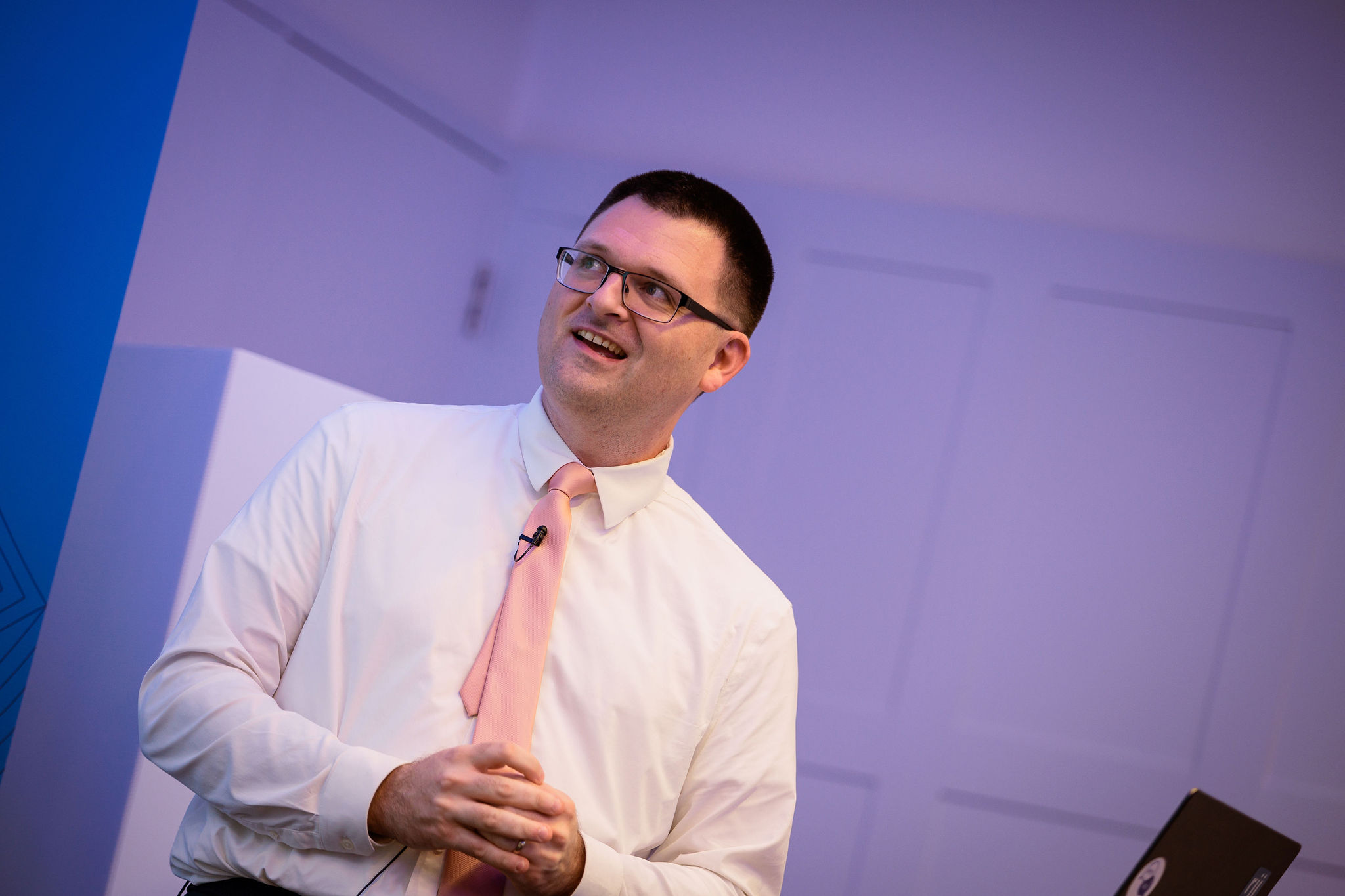
Speaking at the stage
London, UK
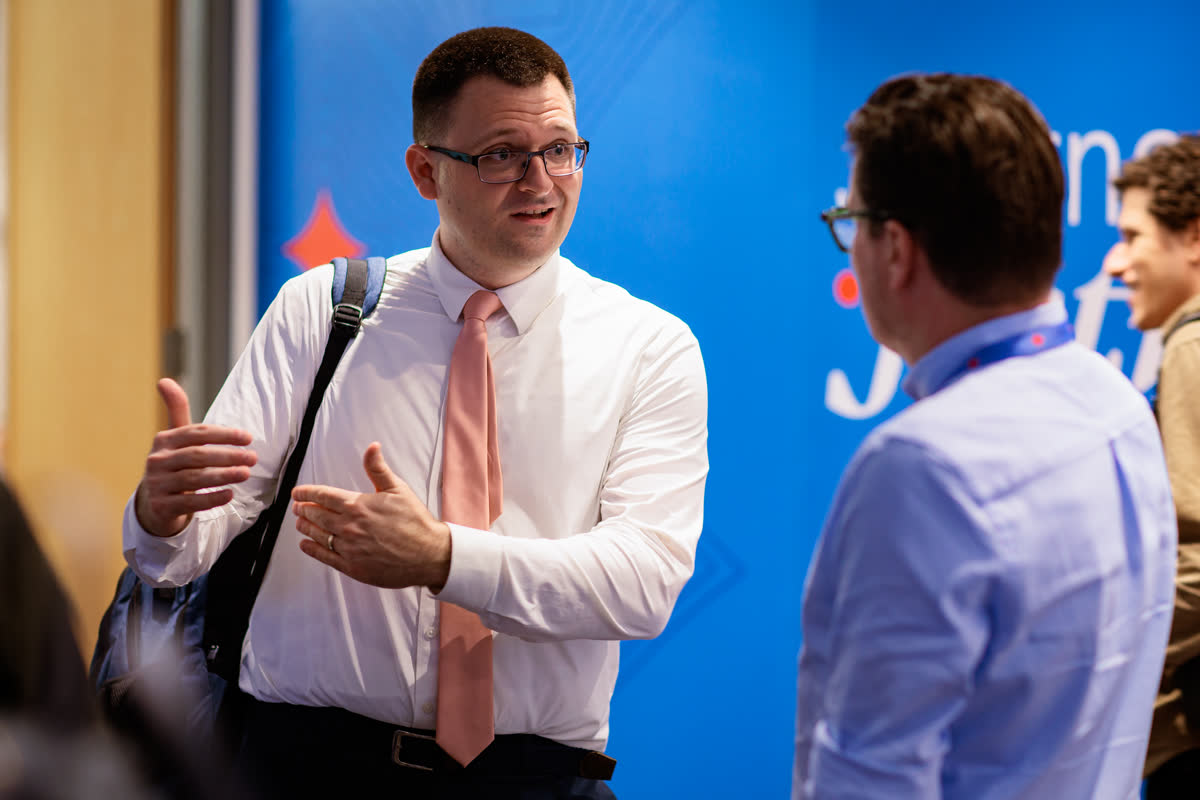
Networking at the booth
London, UK
💡 A Note on the Name
The name "YESEO" has a story worth sharing. In December 2025, during an interview with Medium's Journalism Innovation publication, Ryan explained the naming origins.
"The name was actually coined by Tara Pixley at the Missouri School of Journalism," he noted. "It stuck because it's memorable, short, and works as a brand — even though it's not the most descriptive name in the world for a search optimization tool. But that's the point. Tools should be simple on the outside and powerful on the inside."